Why Most Digital Products Fail to Scale & How Modular Systems Fix It

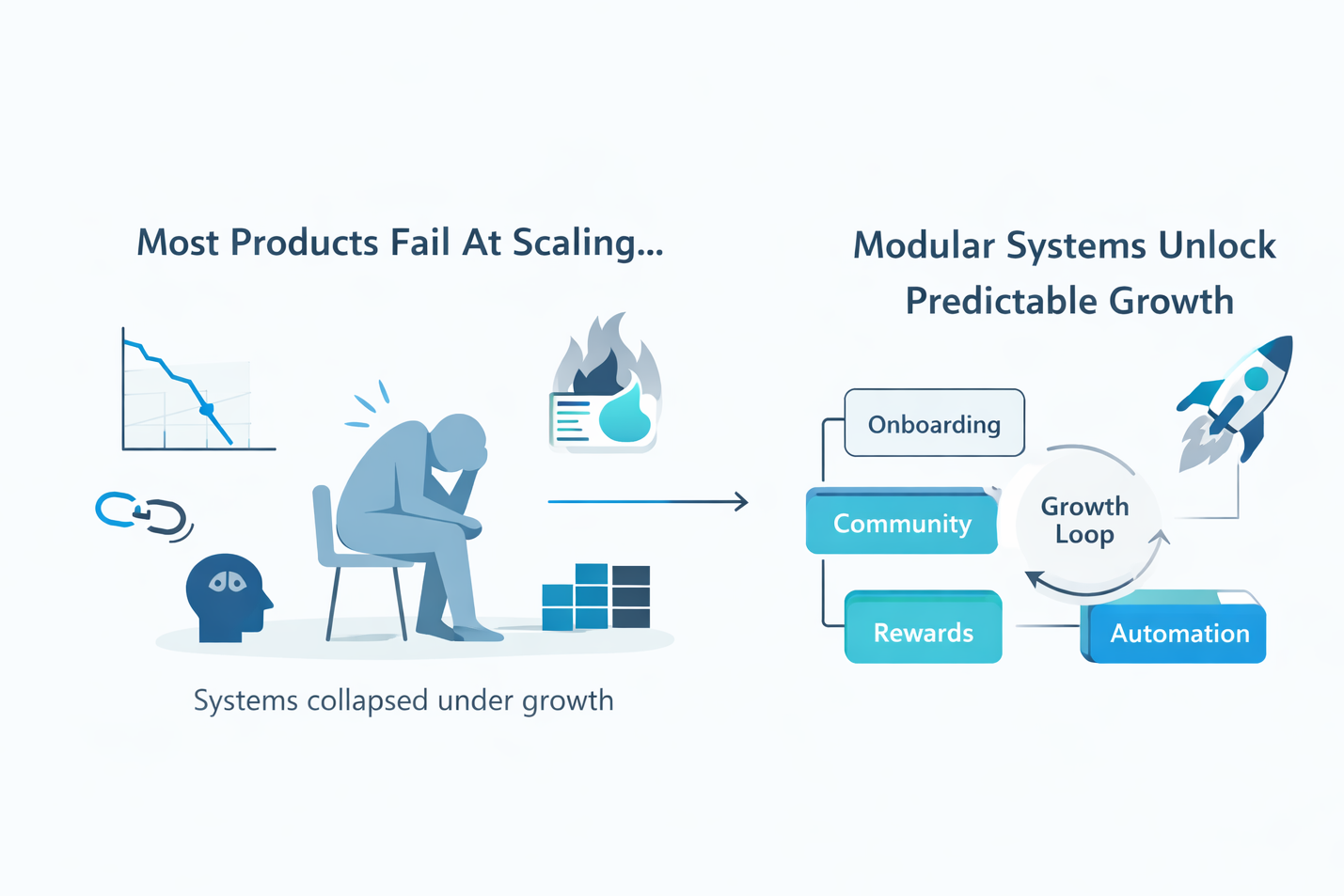
Most founders don’t fail because their product is bad. They fail because their systems collapse under growth.
At the early stage, everything feels manageable. Messages are answered manually, decisions live in the founder’s head, and workflows evolve organically. But once traction appears, friction follows.
Growth exposes the truth: the product was never designed as a system.
At Quanturama, we see this pattern repeatedly across Web3 products, SaaS platforms, and automation-heavy businesses. Teams invest in features and branding, yet overlook the architecture that allows products to scale.
This article breaks down why scaling fails at the system level, what modular thinking really means, and how modular systems create predictable growth.
Scaling Fails When Knowledge Is Centralized
The Hidden Bottleneck: The Founder’s Brain
In most early-stage products, the founder becomes the operating system. They approve decisions, fix edge cases, and remember how everything works.
This works — until it doesn’t.
As usage grows, centralized knowledge leads to inconsistent decisions, slow execution, and fragile operations. The problem isn’t effort. It’s architecture.
Modular Thinking Starts With Decoupling Decisions
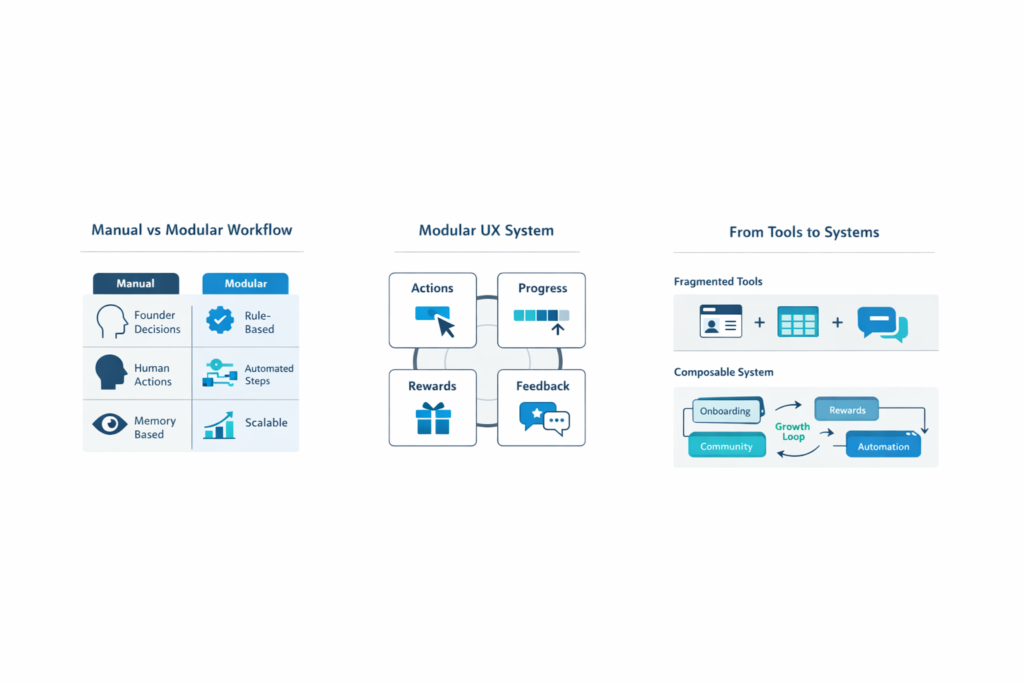
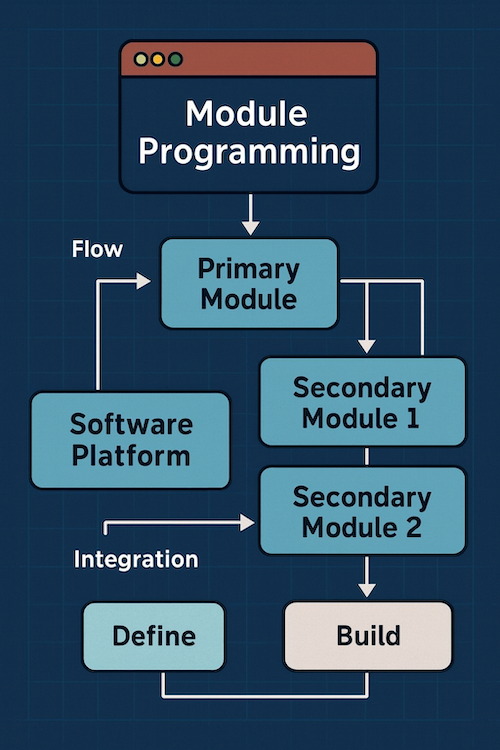
A modular system separates:
- logic from interface
- what happens from who executes it
- rules from people
| Layer | Manual Setup | Modular Setup |
|---|---|---|
| Decision | Founder decides | Rule-based trigger |
| Execution | Human action | Automated module |
| Visibility | Memory-based | Logged & observable |
| Scalability | Linear | Exponential |
Products Break When UX Isn’t Treated as a System
Many teams treat UX as visuals — buttons, colors, and layout. In reality, UX is behavioral design. It defines when users act, why they return, and what keeps them engaged. Without a system behind UX, products rely on novelty, and novelty fades.
Growth Becomes Predictable When Systems Are Composable
Founders often ask which tools they should use. The better question is what system they are building.
Tools are replaceable. Systems are strategic.
Composable systems allow onboarding, rewards, automation, and community to evolve independently — without breaking the product.
Scale Is an Architectural Decision
Most products fail to scale not because of market fit, but because they were never designed to evolve.
Modular systems reduce cognitive load, increase execution speed, and create resilience. They allow teams to change strategies without chaos and grow without burnout.
At Quanturama, we don’t start with features. We start with systems that survive growth.
If your product feels heavier instead of stronger as it grows, it’s usually a system problem — not a talent or effort issue.
Quanturama works with founders and teams to design modular architectures, align UX with real behavioral systems, and turn growth into a controlled process.

BOOK A CALL
]> Click to book
About The Author